Showing posts with label Kaas Plateau. Show all posts

Wednesday, September 2, 2015

Camping-Rivers-Mountain Tops to Valley of Flowers

Fun, Nature and Adventure Camp.. for October 2nd, 3rd, and 4th, 2015. (Starting Oct 1st night).

Enjoy Fresh Breath of Green Nature with Fluffy Clouds, Blue Sky and Good Weather.. 


Camp 1 - Camping by the river (Krishna Valley)- Oct 2nd/3rd.
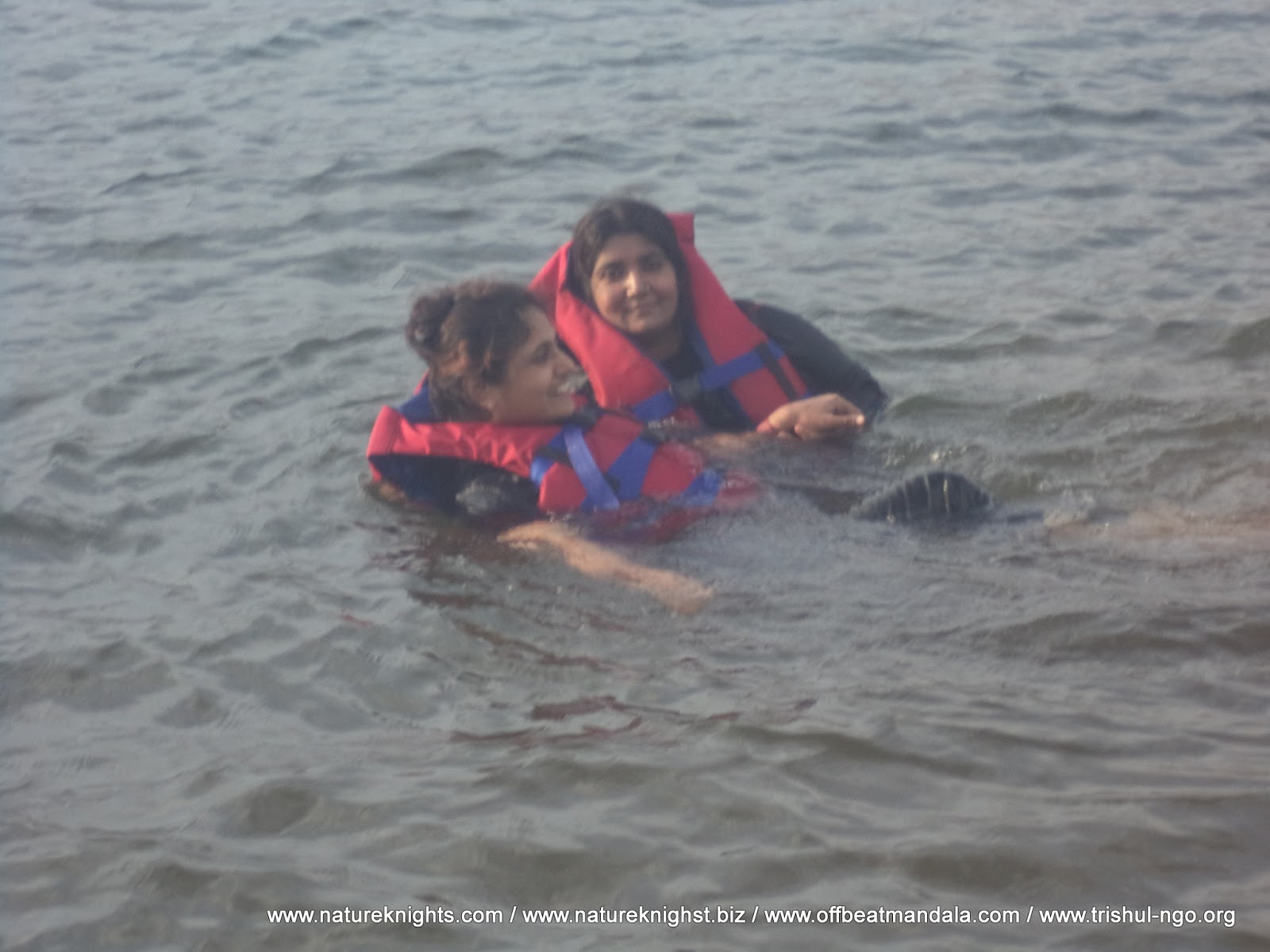
Swim in the River with Life Jackets
Explore Farms
Tractor Ride or Bullock Cart Ride
Walks in the Countryside
Trek in the less explored Mountains
Enjoy Barbecue and Camp-fire

Camp Fee Camp 1: 
Rs.2350/- per head.
Camp 1 Fee Includes: 2 Breakfast; 1 Lunch; 1 Dinner; Barbecue Fixed Quantity
Check-in: Oct 2nd Morning and Check out Oct 3rd, Morning after breakfast 10:30 am.
Campfire and activities as per pre-fixed schedule.


Camp 2 - Camping on the Hilltop (Offbeat Hill Top Camp-site at almost 4000 feet above sea level). Oct 3rd Lunch time to Oct 4th 11:00 am.
Chilling out at 4000 feet above sea level
Camp-fire
Free Cycles for use within camping premises (80 Acres)
Walk in Plateau of Flowers
Explore Farms

Camp Fee Camp 2:
Rs.2000/- + 14% Tax per head on Multi-sharing basis (Minimum 3 persons)i.e. Rs.2280/- with tax included.
Rs.2500/- + 14% Tax per head on Twin-Sharing Basis (Minimum 2 persons).i.e. Rs.2850/- with tax included.

Camp 2 Fee Includes:
1 Meal Cycling (Lunch, Evening Tea/Coffee; Dinner and Breakfast)
Camping Facility (Tents with attached toilets).
Campsite check-in Lunch time 1:00 pm and Checkout next day 11:00 am.
Early check-in subject to availability. You can check with us in advance. 


Excludes:
Travel 
 Optional travel cost (only if booked in advance). 
     Borivali to Krishna Valley Campsite - Rs.350/- Bus starts Oct 2nd late night. If you want to return in this bus the return timings are 8:00 pm at Campsite and 10:00 pm at Wai. (Bus is 2x2 Non AC)

Krishna Valley Campsite to Panchgani Hilltop Campsite - One Way Drop per Jeep cost - Rs.1800/- 

Any meals in transit
Any non-standard meals / beverages ordered not part of the package
Any kind of travel / life or any type of insurance.

Capacity: 20 Adults.

Sharing: Multi Sharing Tents.

100% advance for registrations. (Bookings open).


Details for Internet Banking Transfers (RTGS / NEFT / IFSC):
Account Name: OFFBEAT MANDALA
Account No.: 50200006370273
Bank Name: HDFC Bank Limited
RTGS/NEFT/IFSC: HDFC0000019
Branch: THE AMALDAS CO-OP HSG. SOC. LTD., 
JUHU-VERSOVA LINK ROAD,
WARK-K, (WEST), ANDHERI (WEST), MUMBAI – 400053, MAHARASHTRA


Also check the following links:
Few camping options in Maharashtra Click here
Custom Treks in Maharashtra Click here
Our Corporate Services - Click here
Team Building Program - Click here
​Some of our credentials - click here
Adventure Hobbies - Know more click here
Join our Adventure Club Family and Trips - Click here
​Why us - Click here

Wednesday, September 17, 2014

KAAS Road Trip

Kass the home to millions of tiny flowers in late monsoons. The whole spectacle is beyond words. More than 300 varieties of wild flowers, herbs, orchids, shrubs, insectivorous plants etc. Satara the Ancient City surrounded by seven hills.. 


 Date: October 4th Arrival at Pune by noon or evening.
           October 5th, 2014 Evening.


Budget:

Rs.2,500/- for adults.
Rs.1,700/- for children. (6 to 12 years old).


Inclusions: 

Overnight stay at Pune in furnished studio apartments.
Veg dinner on day 1
Day 2 meals (Breakfast; extra snack on the way; lunch and evening tea snack)
Group lead from Pune
Bottled Water (3 Liters Per head).
Expert Management Services of Nature Knights
Transport will be self drive and not included.

For any customization of  trip get in touch with us


Excludes:

Any meals / menu not part of standard package
Travel or accident insurance
Tips, Shopping etc.
Anything that is not included is excluded.

Cancellation Clause

Cancellation charges before Sept 20, 2014 25% of the total trip fee.
Cancellation charges between September 20 to September 25 th  will be 50% of the total trip fee.
No refund if the cancellation is after September 25th


Planned Schedule:

October 4th, 2014 (Saturday)

Arrival at Pune at Studio Apartment
Evening free yourself
Dinner at Studio apartment


October 5th, 2014

6:00 Early morning start for KAAS after Tea and lite breakfast

8:00 am Short Snack break at Satara

Exploring KAAS

Travel till Bamnoli

Lunch at Bamnoli

Return Travel

Reach Pune by 7:30 pm


About Kaas

Best season: late monsoon till October.

Kaas Lake ls on a distance of 22kms from Satara and most part of the road leading to Kaaz from Satara is hilly. Kaas Plateau  is called as Maharashtra's Valley of Flowers.

During late monsoon most hills are covered with carpets of wild flowers. The lateritic plateau of Kass has becomes home to millions of tiny flowers in late monsoons. The whole spectacle is beyond words. More than 300 varieties of wild flowers, herbs, orchids, shrubs, insectivorous plants etc. This plateau overlooks the lush evergreen forests that serves as a water catchment area of Koyna Dam and which is recently declared as “Sahyadri Tiger reserve". In monsoon the whole area transforms into an unbelievable carpets of flowers like yellow carpets of Smithia and Sonki flowers, Pink carpets of Balsam, Purple carpets of Karvi etc.


About Satara and a bit of its history


The city gets its name from seven (Saat is seven) hills surrounding the city. Tara in local languate also means hills. The seven hills are Ajinkyatara, Sajjangad, Yawateshwar, Jarandeshwar, Nakdicha Dongar, Kitlicha Dongar, and Pedhyacha Bhairoba.

The oldest Dynasty ruling Satara is said to be the Rashtrakutas. The oldest Rashtrakutas are believed to be from ancient Kuntala in the valley of river Krishna. King Manank ruled from 350 - 375 CE. and had built his capital in Maanpur (now Maan in Satara district). The Vakatakas of Vidarbha, another Rashtrakuta rulers were in conflict with Manank. Subsequently, the Rashtrakutas became feudatories to the Chalukyas and came into prominence under Dantidurga around 753 CE.

The empire of Chandragupta II, known as Mahendraditya Kumargupta I, extended as far as Satara district in Deccan when he ruled between 451 and 455 AD. The Mauryan empire in the Deccan was followed by the rule of Satavahans for about two centuries between 550 and 750 AD.

The first Muslim invasion of the Deccan took place in 1296. In 1636 the Nizam Shahi dynasty came to an end. In 1663 Shivaji conquered Parali & Satara fort. After the death of Shivaji, Aurangzeb's son Muhammad Azam Shah conquered Satara fort (Ajinkyatara) after a 6month siege, later won by Parshuram Pratinidhi in 1706. In 1708 Chattrapati Shahu, the son of Chhatrapati Sambhaji, was crowned on the Satara fort. The direct descendents of Raja Shivaji continue to live in Satara. The current king of Satara, Udayanraje Bhosale is the 13th descendent of Shivaji Maharaj.

After their victory in the Third Anglo-Maratha War in 1818, the British Empire annexed most of the Maratha territory to Bombay Presidency, but restored the titular Raja Pratap Singh, and assigned to him the principality of Satara, an area much larger than the present district. As a result of political intrigues, he was deposed in 1839, and his brother Shahji Raja was placed on the throne. This prince died without any male heirs, and as a result Satara was eventually annexed by the British government, and added to Bombay Presidency.

In 1930 several young leaders Yashwantrao Chavan, Dhulappa Navale, Swami Ramanand Bharti, V.S. Page & Gaurihar Sihasane took part in the Civil Disobedience Movement led by Mahatma Gandhi. In 1940 individual sathyagraha was limited, symbolic & non-violent in nature & it was let to Mahatma Ghandhi to choose the satyagrahis. Acharya Vinoba Bhave was the first individual satyagrahi of Mahatma Gandhi & in Satara District region Dhulappa Bhaurao Navale was the first individual satyagrahi.

During the independence struggle, a type of Parallel Government known as Prati Sarkar came into existence. The people of Satara, under the leadership of Krantisinha Nana Patil, ousted the British officials and took power into their hands. During Quit India Movementof 1942, this parallel government replaced British government for 4.5 years from August 1943 to May 1946. Similar ousters of British power in other areas, led to the formation of similar Parallel Governments in Midnapore in West Bengal and Purnia in Uttar Pradesh. Such was the efficiency and power of these Parallel Governments that for nearly 4.5 years, the British did not even try to capture these areas, fearing defeat; which shows the popular nature of these governments.

Monday, August 4, 2014

Up-Coming Events


Cycling, Treks, Biking, White Water Rafting, Waterfall Rappelling, Monsoon Adventure Treks, Safaris, Mountaineering, Rural Eco-Trips, Sailing, Kayaking, Snorkeling, Scuba Diving, etc.

Aug 9, 2014

Kalsubai
Trek to Highest Peak in Maharashtra

Click here for details

Aug 13 Night to, back on 15th Night.

Backpackers trip to KAAS 


Click here for details


Aug 23, 2014
Trek to the King of Forts Rajgad  
(1 Day)
Click here

Aug 24th

Trek for a Cause
A Day spend trekking close to Nature in Forest, Streams, Waterfalls and for a good cause.


The Most Thrilling
Waterfall Rappelling Trekking experience

Aug 24th


White Wuter Rafting
(Kundalika River)
any day of your choice.

Minimum 6 persons.

Oct 17 to 19
Backpacking on Cycles

The Konkan Circuit
(Word's the Limit)

Click here for details


Nov 16 to 30
EBC and Kalapathar Trek
(Nepal)

Batch - 1
(Jan 24, 2015 ) (9 Days).


Batch - 2
(February 1, 2015) (5 Days Ex. Leh).


Thursday, May 1, 2014

Roadtrip Trip to Kaas Plateau

Kass the home to millions of tiny flowers in late monsoons. The whole spectacle is beyond words. More than 300 varieties of wild flowers, herbs, orchids, shrubs, insectivorous plants etc. Satara the Ancient City surrounded by seven hills.. 


 Date: September 19th Night 7pm to 
           September 20, 2014 Night.


Budget:

Ex. Mumbai Rs.3950/- 
(Mumbai - Pune - Satara - Kaas - Mumbai)

Ex. Pune Rs.1850/- 
(Pune - Satara - KAAS - Pune - Cab)


Inclusions: Ex. Mumbai
2 Dinner, 1 Breakfast, 1 Mid-Day Snack, 1 Lunch, 1 Evening Tea / Snack
Transport Non AC Private Bus transport (Mumbai - Pune - Satara - KAAS - Mumbai)
Overnight Stay at Pune (AC Rooms on triple sharing)
for twin sharing add Rs.300/- per head extra (for people registering in 2s)
Expert Management Services of Nature Knights

Inclusions: Ex. Pune
Pune - Satara - KAAS - Pune Travel by No AC Private Bus
during return trip Drop in AC Cab upto 40 km from highway into the town.
Breakfast, 1 Mid-Day Snack, 1 Lunch, 1 Evening Tea
Expert Management Services of Nature Knights

Excludes:

Any meals / menu not part of standard package
2nd night dinner not included
Travel or accident insurance
Tips, Shopping etc.
Anything that is not included is excluded.

Cancellation Clause

Cancellation charges before September 5th will 25% of the total trip fee.
Cancellation charges before September 12th  will be 50% of the total trip fee.
No refund if the cancellation is after September 12th.


Planned Schedule:

September 19, 2014 (Saturday)

Pickup points
6:30 pm Bus Starts at Malad near Oberoi Mall
7:00 pm Andheri near Bislery (where Mumbai/Pune Bus stops) towards Cigratte Factory end of Western Express Highway
7:20 pm after Vakola signal
7:30 pm Bandra (Kalanagar Signal) near Exit of SKY Walk
7:45 pm Sion Station
8:10 pm Chembur (Before Diamond Garden Signal)
8:40 pm Vashi (Junction of Station Road and Highway below bridge)
9:10 pm Belapur
9:30 pm Mc Donald

Halt at Food Court for dinner
11:30 pm arrival at Hotel

Call it a day

4:00 am Early Wake up
Tea/ Bread Butter
5:15 am Depart from Pune
Packed breakfast
Tea on the way
9:00 am arrival at KAAS

Exploring KAAS from 9am to 3:00 pm
Lunch at Bamnoli 
3:30 pm Start back for Mumbai
7:00 pm Arrival at Pune
11:00 pm Arrival at Mumbai

Note: We can try and organise pre-paid cabs at night from Mumbai for dropping people home. The cost of these cabs will be borne and shared by participants using this service.

For Pune participants the cost of cabs to drop them upto 40 km from highway is already budgeted in the cost.


======


About Kaas


Best season: late monsoon till October.

Kaas Lake ls on a distance of 22kms from Satara and most part of the road leading to Kaaz from Satara is hilly. Kaas Plateau  is called as Maharashtra's Valley of Flowers.

During late monsoon most hills are covered with carpets of wild flowers. The lateritic plateau of Kass has becomes home to millions of tiny flowers in late monsoons. The whole spectacle is beyond words. More than 300 varieties of wild flowers, herbs, orchids, shrubs, insectivorous plants etc. This plateau overlooks the lush evergreen forests that serves as a water catchment area of Koyna Dam and which is recently declared as “Sahyadri Tiger reserve". In monsoon the whole area transforms into an unbelievable carpets of flowers like yellow carpets of Smithia and Sonki flowers, Pink carpets of Balsam, Purple carpets of Karvi etc.


Checkout other fixed schedule trips


About Satara and a bit of its history


The city gets its name from seven (Saat is seven) hills surrounding the city. Tara in local languate also means hills. The seven hills are Ajinkyatara, Sajjangad, Yawateshwar, Jarandeshwar, Nakdicha Dongar, Kitlicha Dongar, and Pedhyacha Bhairoba.

The oldest Dynasty ruling Satara is said to be the Rashtrakutas. The oldest Rashtrakutas are believed to be from ancient Kuntala in the valley of river Krishna. King Manank ruled from 350 - 375 CE. and had built his capital in Maanpur (now Maan in Satara district). The Vakatakas of Vidarbha, another Rashtrakuta rulers were in conflict with Manank. Subsequently, the Rashtrakutas became feudatories to the Chalukyas and came into prominence under Dantidurga around 753 CE.

The empire of Chandragupta II, known as Mahendraditya Kumargupta I, extended as far as Satara district in Deccan when he ruled between 451 and 455 AD. The Mauryan empire in the Deccan was followed by the rule of Satavahans for about two centuries between 550 and 750 AD.

The first Muslim invasion of the Deccan took place in 1296. In 1636 the Nizam Shahi dynasty came to an end. In 1663 Shivaji conquered Parali & Satara fort. After the death of Shivaji, Aurangzeb's son Muhammad Azam Shah conquered Satara fort (Ajinkyatara) after a 6month siege, later won by Parshuram Pratinidhi in 1706. In 1708 Chattrapati Shahu, the son of Chhatrapati Sambhaji, was crowned on the Satara fort. The direct descendents of Raja Shivaji continue to live in Satara. The current king of Satara, Udayanraje Bhosale is the 13th descendent of Shivaji Maharaj.

After their victory in the Third Anglo-Maratha War in 1818, the British Empire annexed most of the Maratha territory to Bombay Presidency, but restored the titular Raja Pratap Singh, and assigned to him the principality of Satara, an area much larger than the present district. As a result of political intrigues, he was deposed in 1839, and his brother Shahji Raja was placed on the throne. This prince died without any male heirs, and as a result Satara was eventually annexed by the British government, and added to Bombay Presidency.

In 1930 several young leaders Yashwantrao Chavan, Dhulappa Navale, Swami Ramanand Bharti, V.S. Page & Gaurihar Sihasane took part in the Civil Disobedience Movement led by Mahatma Gandhi. In 1940 individual sathyagraha was limited, symbolic & non-violent in nature & it was let to Mahatma Ghandhi to choose the satyagrahis. Acharya Vinoba Bhave was the first individual satyagrahi of Mahatma Gandhi & in Satara District region Dhulappa Bhaurao Navale was the first individual satyagrahi.

During the independence struggle, a type of Parallel Government known as Prati Sarkar came into existence. The people of Satara, under the leadership of Krantisinha Nana Patil, ousted the British officials and took power into their hands. During Quit India Movementof 1942, this parallel government replaced British government for 4.5 years from August 1943 to May 1946. Similar ousters of British power in other areas, led to the formation of similar Parallel Governments in Midnapore in West Bengal and Purnia in Uttar Pradesh. Such was the efficiency and power of these Parallel Governments that for nearly 4.5 years, the British did not even try to capture these areas, fearing defeat; which shows the popular nature of these governments.